Reading guides · First novels and prizes
The Rust Belt in fiction: novels of Ohio's industrial towns
A guided shelf of eleven novels and story cycles set in Ohio's mill towns and the wider Rust Belt, from Winesburg to Detroit, with questions for book groups.
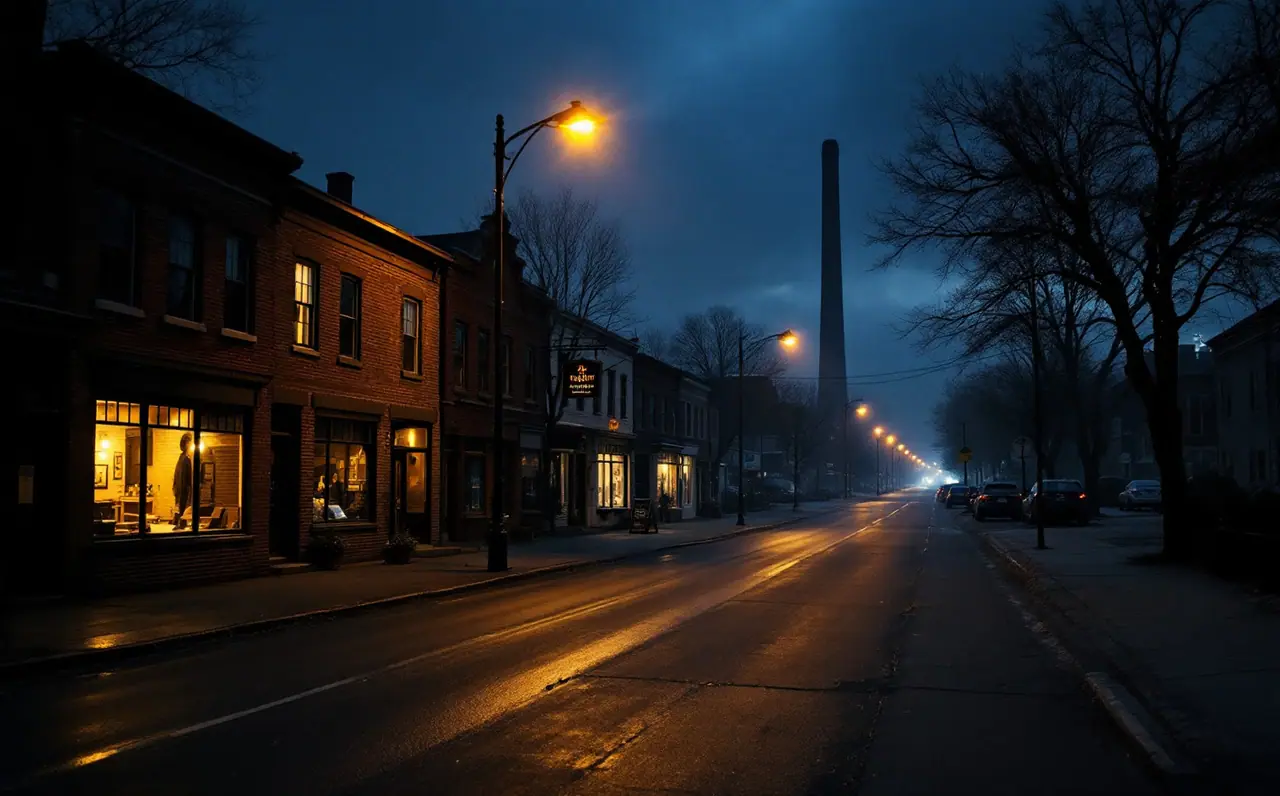
I grew fond of the Rust Belt in fiction before I ever stood in one of its towns. What drew me was the way these books treat a place as a character with a past: the mill that hired everyone's father, the church that held the neighborhood together, the street where one family stayed while the others moved to the suburbs. The best of them are not about decline in the abstract. They are about who stayed, who left, and what each choice cost.
This is a guided shelf of eleven books, arranged in three groups. Ohio sits at the center, because so many of the strongest of these novels are set there, but I have let the list cross into Pennsylvania and Michigan where the same story continues. Several are first books, which suits a part of the country that so many writers feel they have to get out of their system before they write anything else.
The early classics
Winesburg, Ohio by Sherwood Anderson (1919)
Strictly a story cycle rather than a novel: twenty-two linked tales of a fictional small town loosely based on Clyde, Ohio, where Anderson grew up, held together by a young reporter named George Willard who eventually leaves. The town is not industrial yet, and that is why it belongs at the head of the list. The lonely, secretive people Anderson calls grotesques are living on the edge of a change, and you can feel the factories coming. It is in the public domain and free to read at Project Gutenberg. Start with "Hands," then read the rest in order.
Out of This Furnace by Thomas Bell (1941)
The great steel novel. Bell follows three generations of a family of Slovak and Rusyn immigrants, beginning with their arrival from Austria-Hungary in 1881, in Braddock, Pennsylvania, the mill town on the Monongahela just east of Pittsburgh. The book moves through the brutal early years in the mills, the failed strikes and finally the unionizing of the 1930s, and it was drawn from Bell's own family. It is plain in style and huge in feeling. If you want to understand what the mill meant to the people inside it, read this first.
The middle of the century
The Bluest Eye by Toni Morrison (1970)
Morrison's first novel is set in Lorain, Ohio, her hometown on Lake Erie, in 1941. It is narrated mostly by a girl named Claudia MacTeer, and it centers on Pecola, a Black child who believes she is ugly and prays for blue eyes. The book is short and devastating, and it is very precise about the hierarchies of a small industrial city: who rents and who owns, whose house is warm, who is put "outdoors." It deals with incest and child abuse, which book groups should know before they choose it.
Sula by Toni Morrison (1973)
The Bottom is a Black neighborhood on a hill above the fictional town of Medallion, Ohio, and as the novel opens it is about to be bulldozed for a golf course. Morrison then goes back to 1919 and follows two girls, Sula and Nel, from childhood through the decades of their friendship to 1965. Sula is less about industry than about a community that the town around it never valued. Read it beside The Bluest Eye and you have Morrison's Ohio, a place of hard work and harder judgments.
them by Joyce Carol Oates (1969)
Oates's long novel, which won the National Book Award in 1970, follows a white working-class family from the late 1930s to the Detroit riots of 1967. Loretta and her children, among them Jules and Maureen, move through poverty, violence and the city's factories and slums in a book that one early reviewer described as overflowing with every kind of disaster. It is more melodramatic than anything else on this list, and it is the novel that best captures the scale of an industrial city when the work was still there.
The End by Salvatore Scibona (2008)
Published much later, but set squarely in the middle of the century, on August 15, 1953, the Feast of the Assumption, in Elephant Park, an invented Italian immigrant neighborhood of Cleveland. A baker learns that his son has died in Korea and refuses to believe it, and from that one carnival day the novel travels back through seven decades of its characters' lives. It catches a neighborhood at the moment the first immigrants' children are leaving for the suburbs and Black families are arriving on nearby streets, and it watches the street-level tension that follows without excusing anyone. It was a first novel and a National Book Award finalist. Our reader's guide to The End covers its structure and its long sentences, and our profile of Salvatore Scibona traces how a writer raised outside Cleveland came to build it.
The long aftermath
Everyday People by Stewart O'Nan (2001)
O'Nan grew up in Pittsburgh, where his father worked for Alcoa, and this novel is set in 1998 in East Liberty, a mostly Black neighborhood of the city, over one week in early autumn. At its center is Crest Tolbert, eighteen, paralyzed after an accident that killed his best friend, and around him a crowd of relatives, friends and neighbors. It is a quiet, crowded book about a city neighborhood long after the boom years, and O'Nan gives every one of its people a full inner life.
Knockemstiff by Donald Ray Pollock (2008)
Another story collection, and another first book. Pollock grew up in Knockemstiff, a hollow near Chillicothe in southern Ohio, and worked at the Mead paper mill in Chillicothe as a laborer and truck driver until he was fifty. These linked stories about the people of that hollow are violent, funny and unsparing, and they won the PEN/Robert Bingham Prize. They are not for every reader. For the ones they suit, nothing else on this list sounds like them.
American Rust by Philipp Meyer (2009)
Meyer's first novel moves across the state line into the Monongahela Valley of Pennsylvania, to a fictional town called Buell in Fayette County, in a region of dead steel towns the characters call the Valley. Isaac English, nineteen and brilliant, and his friend Billy Poe, a former high school football star, set out to leave and are caught up in a killing on their way out. The novel is told in close turns through several characters, including Billy's mother and the town's police chief, and it is the most direct book on this list about what happens to a town when the mills close.
The Devil All the Time by Donald Ray Pollock (2011)
Pollock's first novel goes back to the decades after the Second World War, in and around Knockemstiff and the town of Meade, Ohio, and in Coal Creek, West Virginia. A traumatized veteran, his son Arvin, a pair of killers who prey on hitchhikers and a corrupt preacher circle each other in a book that is closer to Southern gothic than to social realism. I include it because it shows the other side of industrial Ohio: the poor hill country just outside the mill towns, where the work and the churches offer very little shelter.
The Turner House by Angela Flournoy (2015)
A debut that was a finalist for the National Book Award. The Turners are a Detroit family with thirteen children, and the novel moves between the 1940s, when the parents arrived and made a home in the city, and 2008, when the family house has lost most of its value and the grown children must decide what to do with it. The house becomes a character in its own right. It is warmer than most of the books here, and it is the best novel I know about what a family owes a place after the place stops paying back.
Reading the list as a whole
Put side by side, these books share a few preoccupations that are worth naming before a group starts.
| Book | Setting | When | Debut? |
|---|---|---|---|
| Winesburg, Ohio | Fictional Winesburg, Ohio | Turn of the century | No |
| Out of This Furnace | Braddock, Pennsylvania | 1881 to the 1930s | No |
| The Bluest Eye | Lorain, Ohio | 1941 | Yes |
| Sula | Medallion, Ohio | 1919 to 1965 | No |
| them | Detroit | Late 1930s to 1967 | No |
| The End | Cleveland | 1953 and decades before | Yes |
| Everyday People | Pittsburgh | 1998 | No |
| Knockemstiff | Southern Ohio | Recent decades | Yes |
| American Rust | Fayette County, Pennsylvania | The 2000s | Yes |
| The Devil All the Time | Southern Ohio and West Virginia | 1945 to the 1960s | Yes (first novel) |
| The Turner House | Detroit | 1940s and 2008 | Yes |
The debut column surprised me when I filled it in. Five of the eleven are first books, and a sixth is a first novel. Our guide to debut fiction prizes explains how some of these first books found their readers, and it is no accident that a region so many writers leave produces so many first novels: it is the material they brought with them.
Questions a book group could use across the list
These work for any book above, and they work especially well if a group reads two from different groups, say Out of This Furnace and American Rust, a few months apart. For more on writing questions like these, see our guide to book club questions for literary fiction.
- Who leaves town in this book, and who stays? Does the novel treat leaving as escape, betrayal or something else?
- Where does the money come from? Name the main employer, and ask what the book shows about what that employer gives and takes.
- How does the novel handle race? Several of these towns are divided by it, sometimes street by street. Who in the book notices the lines, and who pretends not to?
- Is the place itself a character? Pick one building (a mill, a church, a house, a bar) and describe what it does in the story.
- What role do fathers play? In a striking number of these books, fathers are dead, absent, broken by work or not who they seem.
- Does the book feel like it is mourning something? If so, is the thing it mourns worth mourning, or does the novel see past the nostalgia?
- Compare the oldest and newest book you have read from this list. What has changed about work, and what has not changed at all?
- Would someone who grew up in a town like this recognize it in the book? What would they say the author got wrong?
Where to start
If you read only one, read The Bluest Eye. It is short, it is a first novel, and it holds the whole subject in very few pages. If you have a winter and a strong stomach, read Out of This Furnace and American Rust back to back, two books about the same river valley written almost seventy years apart. And if you want a single carnival day that contains a whole century of immigrant Ohio, read The End.
More guides of this kind are on the reading guides shelf.

Ivo Marchbanks
Ivo follows first novels, small presses and the prizes that notice debuts. He likes regional fiction, especially books about industrial towns and the families that stayed in them.

Debut fiction prizes explained: the awards that read first novels
A plain guide to the prizes that look at first novels and young fiction writers: who runs each one, who is eligible, and why publishers usually do the entering.
Read on
Book club questions for literary fiction that start a real conversation
How to write book club questions that open an argument instead of a quiz: five kinds of question, eighteen that fit any literary novel, and a worked example.
Read on